

Blog / Driving Safety

Blog

All Driving Safety New Toyota Cars Kingsport Toyota Dealer Around Town Activities and Excursions Kingsport Toyota Service Car Maintenance Car Tips SUVs Toyota Trucks Car Features Tennessee Toyota of Kingsport Service About Toyota Car Buying Tips Toyota of Kingsport Toyota Performance Vehicles Hybrid Vehicles Fun Facts Kingsport Used Cars Toyota Tundra Travel Destinations Used Toyota Cars Car Warranty Information Fuel Efficient Toyota All-Wheel Drive Vehicles Electrified Vehicles Toyota History Toyota RAV4 Toyota Tacoma

6 Sounds Coming From Your Car You Should Never Ignore

If you are driving and suddenly hear strange noises coming from your car, don't take any chances by ignoring them. Avoid the potential for accidents or future costly repairs by taking your vehicle to a professional mechanic for a diagnosis. Here are some unusual car noises that warrant attention. Squealing of the Brakes If you hear unusual squealing when you tap the brakes, the likely culprit is worn brake pads that need to be replaced. A metal shim causes the brake pads to make the squealing sound when they wear thin. Another reason for the squealing may be under the hood, indicating that the drive belt may have slipped and needs replacing. Other problems may be weak brake shoe retaining springs, distorted brake shoes, or brake dust. more Brake Grinding A grinding noise while braking may signal a more serious problem when the squealing mentioned above was never resolved. If the brakes have reached the grinding stage, this may mean that the brake pads have worn down and critical parts are now wearing down to the rotor. The brakes at this point are experiencing metal-on-metal contact, setting the stage for complete brake failure if the brakes aren't replaced immediately. Banging from the Engine Sounds from the engine such as banging, clunking, or knocking should warrant immediate attention from a mechanic. Reasons for this noise vary from a misfired engine to a defective spark plug to a bad power component. Banging noises may also indicate leaking valves within the engine, as well as a faulty ignition. In either case, it is best to take your vehicle to a mechanic to diagnose and fix the problem. Rattling Noises from the Hood When you hear rattling noises coming from your car's hood, it may be connected to your catalytic converter, which helps to reduce emissions. A rattling noise may mean that maintenance or repair is needed. If the problem is not the catalytic converter, the rattling may be coming from the camshaft belt. Either way, failure to repair these problems can result in engine failure. Roaring Noises Any roaring sounds may indicate problems with either the tires or wheel bearings. If the noise comes from the tires, then replacing them should solve the problem. To test whether the noise is coming from the wheel bearings, drive at a regular rate of speed, and switch the steering wheel back and forth as you would when changing lanes. If in fact the wheel bearings are damaged, then it's best to get them repaired before the damage causes the wheels to stop working. Clicking in the Steering Wheel Another common noise is a clicking sound that can sometimes be heard in the steering column. This may mean that CV joint is worn, bearings within the steering column have run low, or power steering fluid levels may be low. While these may seem like minor issues, failure to get them maintained or replaced can result in poor vehicle performance in the future. Car noises that sound abnormal should not be taken lightly and should be properly diagnosed. A trip to your dealership or preferred mechanic can save you big bucks in the long run. Image by Davgood Kirshot from Pixabay
6 Top Toyota Safety Features

Toyota is one of the leading manufacturers in vehicle safety that earns awards and high safety ratings year after year from organizations dedicated to keeping drivers safe on the road. All Toyota vehicles come standard with the Star Safety System, which is a suite of six safety systems that protect drivers and occupants in collisions. Check out the following six top Toyota safety features that make up the Star Safety System, and rest assured you and your passengers will be kept safe and protected on the road when driving a Toyota. more 1. Traction Control Traction Control reads data from your vehicle's wheel-speed sensors to determine whether a drive wheel is turning faster than the wheel on the opposite side, which indicates loss of traction. Upon detecting slippage, this feature automatically reduces engine power until the wheel that's slipping slows down and regains traction. When reducing engine power doesn't help, the vehicle's braking system slows the wheel by pulsing the brake for that particular wheel. 2. Anti-lock Brake System Toyota's Anti-lock Brake System prevents brakes from locking up and your vehicle from dangerously skidding when you lose control of your vehicle. This feature uses magnetic wheel-speed sensors and a computer to recognize when your vehicle locks up or loses traction, then forces your brakes to pulse until all wheels are rolling at the same speed. 3. Brake Assist Brake Assist detects when you suddenly hit the brakes in an emergency and applies force and extra brake pressure to help you slow down or stop at a faster rate. This feature is helpful at preventing collisions, and can even be activated when the vehicle detects you're stepping on the brakes too lightly. 4. Smart Stop Technology This feature automatically reduces your vehicle's engine power in the event you push down on both the brake and accelerator pedals at the same time, or when the gas pedal becomes jammed and braking fails to work. Smart Stop Technology helps keep occupants safe when it's necessary to bring your Toyota to an immediate stop. 5. Electronic Brake-Force Distribution Part of Toyota's Anti-lock Brake System, this feature redistributes brake force evenly across all wheels to compensate for uneven weight distribution under hard, sudden braking. Electronic Brake-Force Distribution helps you maintain control of your vehicle by reducing brake pressure on wheels supporting the least amount of weight. 6. Vehicle Stability Control When your vehicle starts navigating in the opposite direction in which you're steering, Vehicle Stability Control reduces engine power and pulses the right or left-side brakes so your vehicle returns to steering in the proper direction. The system uses data from the Anti-lock Brake System and steering wheel sensor to determine whether the vehicle is steering properly, then automatically corrects the situation. If vehicle safety is one of your top concerns when purchasing a new vehicle, stop by your local Toyota dealership to learn more about the Star Safety System. Optional safety features available on most Toyota models include pre-collision technology, blind spot monitor, lane departure alert, and more.

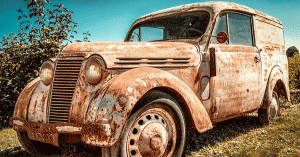
Old rusted out car sitting in a field

6 Signs It's Time For a New Car

Owning a car is a necessity for most Americans, but the daily commute can really do a number on the best-kept vehicle. If you've been putting off trading in your old car for a new one, you may just be holding off the inevitable. Here are some signs that it's time to upgrade: Repairs are Costing More Than the Car is Worth Maintenance and repair costs are part of the responsibility of owning a vehicle, but when those costs exceed the car's value, you've got a real problem on your hands. Older cars will get to a point where they require costlier repair jobs, so you end up sinking your money into an endless pit. Instead of wasting your money, why not invest some of it into the down payment on a new vehicle? more Your Car is No Longer Safe Older cars are more susceptible to breakdowns and malfunctions. Even the best cars on the market today will one day pose issues as they age – it's just the nature of automobiles. If your old car is no longer reliable or it poses a safety hazard to you or your family, it's time to buy a new one. You'll know if its safety is compromised when it inexplicably slows down on the highway, has trouble starting, or the engine has a tendency to shut off when you come to a stop. It No Longer Suits Your Lifestyle Cars that once suited us a decade ago may not fit our current lifestyle. Families grow, needs change, gas prices go up, and that once-favorite vehicle now seems more of a burden. Ask yourself what type of vehicle would best suit your daily commute, lifestyle, and family size. If your current car doesn't cut it, it's time to trade it in. You're Paying Too Much for Gas This one is a common complaint of drivers who own older vehicles. Modern cars boast fuel-efficient designs that optimize the amount of gas you put into them, so you get more for your money. If you've got a gas guzzler on your hands and want to take advantage of new engine advancements, now's the time. Your Car No Longer Qualifies for Safety-Related Insurance Discounts Older vehicles do come with the perks of requiring less insurance. On the other hand, outdated cars don't qualify for safety-related discounts. Thanks to their state-of-the-art safety features, new cars do, so you have to ask yourself which trade-off you'd prefer to make. Most people would rather be in a safer vehicle. You're Craving a Change Sometimes the best reason to buy a new car is simply that you're ready for something different. There's no need to hang on to an outdated vehicle if you'd rather be in something more updated with the latest design aesthetics and safety features. A new car can signify a new start, so why put it off when you can make the switch today? It can be difficult to part with a beloved old car, but when you find one that suits your current lifestyle, you'll wonder why it took you so long to make the switch. Image via Pixabay

Contact Us

Fill out this form below and we'll contact you shortly
*Required Fields