

Blog / Car Warranty Information

Protecting Your Toyota with an Extended Warranty

There's no better way to protect your Toyota than with an extended warranty, and the Toyota extended warranty options are some of the best in the business. With three plans to choose from, the only question is which one is right for you.

Protecting Your Toyota with an Extended Warranty

Powertrain Protection

The first level of protection is this plan. It kicks in once the warranty expires, and it covers the engine, transmission, axle assembly, and a number of other eligible components. There's flexibility in the coverage terms; you can choose for up to six years or 100,000 total miles. When you get covered, you get immediate access to our nationwide service network so that all covered repairs or maintenance are done by factory-trained technicians who know your Toyota inside and out. Plus, the plan comes with 24/7 roadside assistance and even reimbursement for covered vehicle rentals, lodging, and meals if you get stuck.

Gold Protection

If you want a bit more, the Gold extended warranty covers everything that the Powertrain warranty covers, plus a number of other parts that aren't covered. For example, the Gold protection plan starts covering a whole lot of the air-conditioning, such as the blower motor, the compressor, and the condenser fan and motor. You also now get coverage for a lot of the brake parts, including the master cylinder and the seals and gaskets. You can choose between a range of coverage lengths from three years and 50,000 miles up to 8 years and 125,000 miles. You get all the same other perks that come with the powertrain plan, including the roadside assistance and reimbursements.

Platinum Protection

If you want the highest level of protection, this is the plan for you. It covers everything that the previous two plans offer, but it offers coverage for even more parts of the vehicle. You get complete coverage of the electrical parts, for example, many of which are not covered even in the Gold plan. This includes even little things, like the turn signal flasher and the windshield wiper control relay. This plan, too, is available with flexible terms from three years and 50,000 miles up to 10 years and 125,000 miles. It also comes with all the perks for roadside assistance coverage and compensation for rental vehicles, etc.

Other Perks

There's some other perks to these plans, and one of the most important is that you can transfer your extended warranty, at no cost, one time to a second buyer. You can also choose from several deductible options to get what's right for you, and if you change your mind, you can cancel within 30 days for a full refund.
To learn more about the warranties offered by Toyota, contact us at Toyota of Kingsport, TN today.

Posted in:

Related Posts

Pros and Cons of Buying an Extended Warranty for Your New Car

Buying a car is expensive as it is, especially if you splurge for the optional extras and pricier trims that come with all of the safety features and technological advances that are supposed to prevent the worst from happening, such as a collision or breakdown. That makes shelling out even more hard-earned money for an extended warranty a tough decision, with it possibly not seeming worth the extra cost. However, we're here to help weigh the pros and cons of buying an extended warranty for your new car. Pros With recent studies suggesting that reliability and durability are important factors many of us consider when buying a car and car owners are now keeping their cars for longer than ever, it seems that extended warranties might be more popular. However, they very rarely feature in a list of many car buyer's top priorities. But what are the pros of purchasing an extended warranty? Even though many car dealerships offer warranties as standard, there may be more to a customer's needs than those warranties offer. Third-party extended warranties can be significantly more flexible in terms of what they offer. This means that if you want longer coverage, tailored coverage on specific things such as bumper-to-bumper, or handy extras like roadside assistance, these things can be tailored to fit specific needs. Modern vehicles are also getting more and more complex, jam-packed with the latest in technological advancements and advanced safety features. Even if the car is running fine, if one of these many computer systems fail, it can be very costly to fix them. An extended warranty can take the worry of paying to diagnose, isolate, and repair these complicated problems completely away. Cons So, extended warranties can be extremely useful to fit your specific needs and protect all of the expensive and complicated electronic systems in your car, as well as protecting against any unwanted breakdowns. But what are some of the reasons against opting to purchase one for your vehicle? Like most insurances, there's always a risk that the cost of paying for an extended warranty will never be balanced out by using it to fix something, as there's a chance that nothing bad will ever happen and there will be no need to use it. Sometimes the only thing that will be gained is the peace of mind that if something terrible were to happen, you could save plenty of money and not be left stranded. Most extended warranties are also expensive. For many car buyers, the luxury of opting to pay for an extended warranty will be nothing more than a pipe dream, as often the cost of purchasing a car alone takes a hefty toll on their bank balance. This is especially the case when you factor in the above point that spending all that money on an extended warranty could ultimately turn out to be nothing but a lost bet. Extended warranties are definitely not for everyone, but they do help to give peace of mind. In many cases, it's better to have them and not need them, instead of needing them but not have them. For more advice on extended warranties, check out this helpful guide or head to your local dealership. Image by Martha Maria from Pixabay

Toyota Hybrids in Kingsport, TN - Toyota of Kingsport

Why Toyota Hybrids Make Sense for Kingsport Drivers

Toyota has been building hybrids long enough that electrification is no longer confined to a handful of specialist models. For Kingsport, TN drivers, the current Toyota hybrid selection stretches from Corolla Hybrid and Prius to the Sienna, 3-row SUVs, and even i-FORCE MAX trucks. More importantly, Toyota doesn't use hybrid technology for one purpose alone. Some models concentrate on reducing fuel consumption, while others use electric assistance to increase power. Conventional Toyota hybrids manage the gasoline engine and electric motors automatically, so there's no external charging requirement during normal operation. The Hybrid Range Covers More Than Economy Cars Toyota's hybrid lineup includes the Corolla Hybrid, Prius, Camry, Corolla Cross Hybrid, RAV4, Sienna, Toyota Crown, Toyota Crown Signia, Highlander Hybrid, Grand Highlander Hybrid, and Sequoia. Tacoma i-FORCE MAX, Tundra i-FORCE MAX, and 4Runner i-FORCE MAX use hybridization with a greater emphasis on performance. This breadth matters because buying a hybrid shouldn't require choosing the wrong vehicle shape simply to get the powertrain. A commuter, a family needing 3 rows, and a truck buyer have completely different requirements, yet each can consider Toyota electrification. Some Toyota Hybrids Put Fuel Economy First The 2026 Camry demonstrates what a conventional hybrid can achieve, reaching up to an EPA-estimated 52 mpg city and 49 mpg highway. Even the considerably larger 2026 Sienna can achieve up to 36 mpg city and 36 mpg highway. For drivers covering regular miles around Kingsport, those figures illustrate the advantage of allowing electric assistance to handle part of the workload without adding a charging routine. SUV buyers can apply the same basic approach to models such as the RAV4, Highlander Hybrid, and Grand Highlander Hybrid while choosing passenger and cargo capacity appropriate to their needs. Hybrid Power Can Also Be About Performance The 2026 Toyota Crown neatly demonstrates that a hybrid badge doesn't tell you everything about the vehicle's priorities. XLE and Nightshade models use a 2.5L hybrid system producing 236 net combined hp, while the Platinum's Hybrid MAX powertrain increases output to 340 net combined hp. Toyota applies a similar principle to its i-FORCE MAX trucks, using electric assistance as part of the performance equation. In other words, hybrid technology isn't inherently an economy setting applied to an otherwise conventional vehicle. Its role depends on how Toyota has engineered the powertrain. Technology Extends Beyond the Hybrid System Depending on model and trim, Toyota hybrids can include Toyota Audio Multimedia touchscreens, wireless Apple CarPlay® and Android Auto™ compatibility, available Wi-Fi connectivity, and connected services. Toyota Safety Sense™ is also standard across much of the current lineup, though the version and equipment differ by model. Available technologies can include Pre-Collision System with Pedestrian Detection, Lane Departure Alert with Steering Assist, Lane Tracing Assist, Road Sign Assist, and Dynamic Radar Cruise Control. Hybrid Components Receive Dedicated Warranty Coverage Toyota covers the hybrid battery in current hybrid vehicles for 10 years or 150,000 miles, whichever comes first. Other hybrid-related components receive coverage for 8 years or 100,000 miles. New Toyota vehicles also include a 3-year/36,000-mile basic warranty and 5-year/60,000-mile powertrain warranty. ToyotaCare Supports the First Years of Ownership Eligible new Toyota vehicles include ToyotaCare, covering normal factory-scheduled maintenance for 2 years or 25,000 miles, whichever comes first. It also provides 24-hour roadside assistance for 2 years with unlimited mileage, including support for a dead battery, flat tire, emergency fuel delivery, lockout, or towing. Genuine Toyota Parts and Accessories are also available, including model-specific items such as all-weather floor liners, cargo organizers, and roof accessories. Compare Toyota Hybrids at Toyota of Kingsport Toyota's hybrid range gives Kingsport shoppers the option to prioritize fuel economy, passenger capacity, SUV versatility, or stronger electrified performance. Visit Toyota of Kingsport to compare available hybrid cars, SUVs, minivans, and i-FORCE MAX models in person. Schedule a test drive to find the Toyota hybrid configuration that fits your driving and passenger needs.

Toyota Oil Change in Kingsport, TN - Toyota of Kingsport

When Do I Need to Schedule an Oil Change in Kingsport, TN

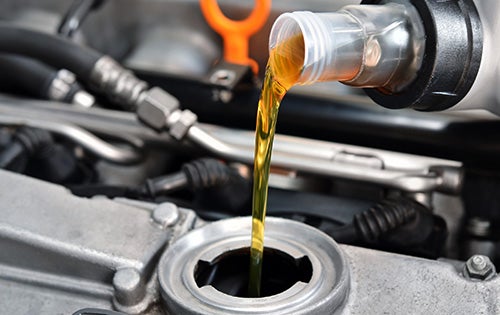
Regular oil changes are one of the simplest and most important things you can do to protect your Toyota. If you're asking yourself when to schedule a Toyota oil change in Kingsport, TN, you're already thinking like a responsible car owner. Staying on top of this routine service helps your engine run cleaner, cooler, and longer. Why Oil Changes are Important for Your Toyota Your engine oil lubricates moving parts, reduces friction, and helps manage heat. Over time, oil breaks down and collects contaminants that reduce its effectiveness. When that happens, your engine has to work harder - and that extra strain adds up fast. Scheduling a timely oil change  is one of the easiest ways to avoid costly repairs down the road. How Often Should You Change Your Oil The right interval depends on your vehicle and the type of oil it uses. Many newer Toyota models using full synthetic oil can go up to 10,000 miles between changes, while older vehicles or those using conventional oil may need service every 5,000 miles. Your best reference is always your owner's manual, which outlines the manufacturer's recommended maintenance schedule for your specific model and driving conditions. Signs Your Toyota Needs an Oil Change Soon Even if you haven't hit your mileage marker yet, certain signs suggest it's time to change your oil. A dark or gritty appearance when you check the dipstick is an indicator. You may also notice your engine running louder than usual, which can signal that the oil is no longer providing adequate lubrication. A persistent oil change reminder light on your dashboard should never be ignored - that's your Toyota letting you know it needs attention. How Driving Habits Affect Your Service Schedule Not all driving is the same when it comes to engine wear. Frequent short trips, stop-and-go traffic, towing, or driving in extreme temperatures are all considered severe driving conditions. If your daily routine involves a lot of city driving or frequent short trips, you may need oil changes more often than the standard recommendation. It's worth discussing your habits with a service advisor to dial in the right schedule for your situation. Keeping Up With Toyota Maintenance Staying current with your oil change schedule is a core part of the Toyota Care maintenance program that comes with every new Toyota. Even after that coverage period ends, keeping a consistent service routine protects your car and helps maintain its performance and resale value. Setting a reminder on your phone or keeping a simple maintenance log can make it easy to stay on track. Schedule Your Oil Change Today Keeping your Toyota in great shape doesn't have to be complicated. If you're unsure when your last oil change was, or if you're noticing any of the warning signs mentioned above, now is a great time to get it checked out. The team at Toyota of Kingsport is ready to help you stay on schedule and keep your vehicle performing at its best. Book your service appointment at Toyota of Kingsport online and get back on the road with confidence.